

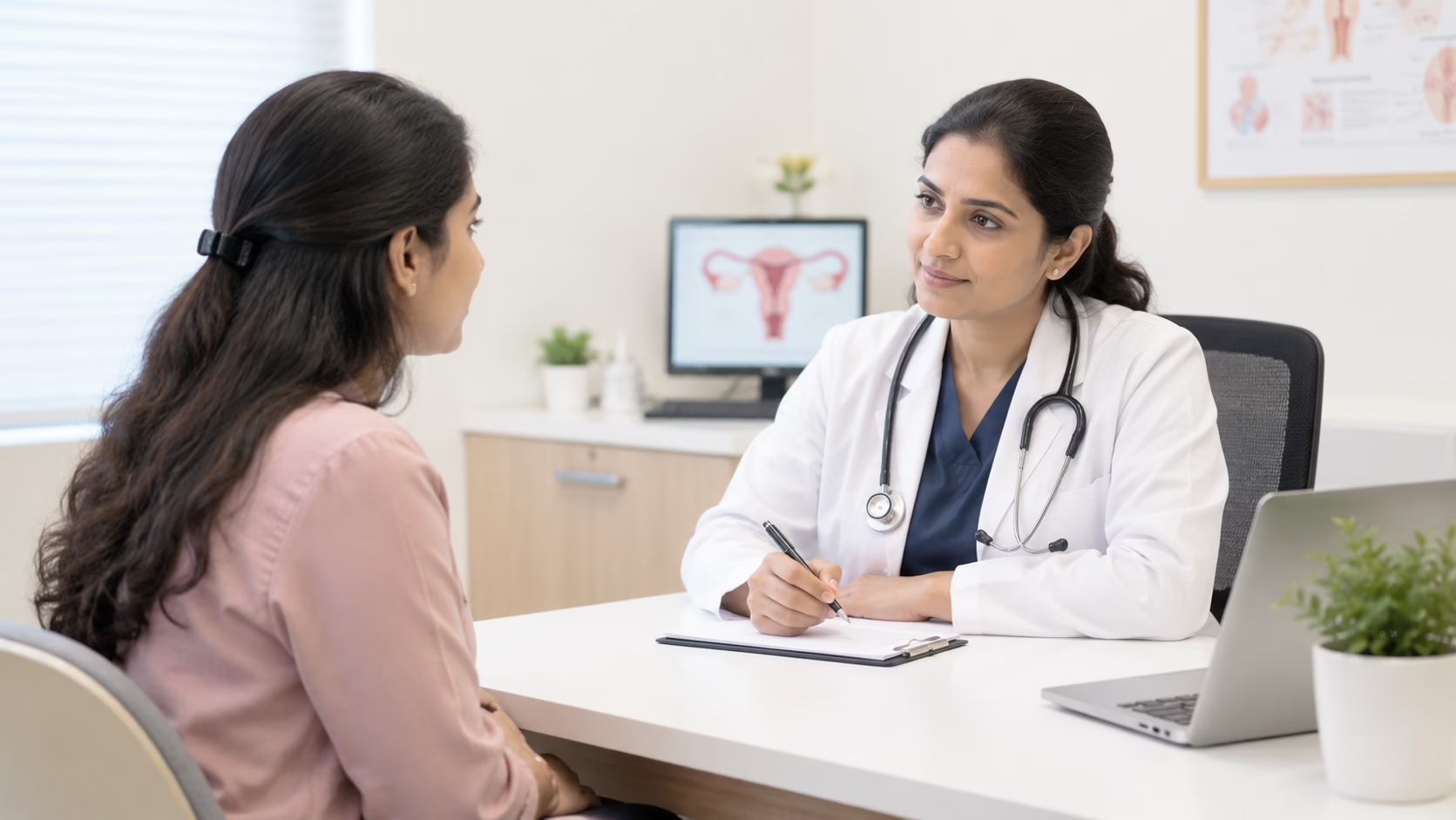
Being told that you need a colposcopy after an abnormal Pap smear can understandably lead to questions.
Does an abnormal Pap smear mean cancer? Why is a colposcopy necessary? Is it painful? Will a biopsy be performed? What happens after the procedure?
A colposcopy is a closer examination of the cervix that may be recommended when cervical screening shows certain abnormalities or when your doctor needs more information about the cervical tissue.
Importantly, being referred for a colposcopy does not automatically mean that you have cervical cancer. The purpose of the examination is to investigate cervical changes more closely and determine whether further monitoring or treatment is needed.
What Is a Colposcopy?
A colposcopy is a procedure used to examine the cervix, vagina and sometimes the vulva more closely.
The doctor uses a special magnifying instrument called a colposcope. The colposcope remains outside the body and allows the doctor to examine the tissues at greater magnification.
During the examination, special solutions may be applied to the cervix to make abnormal areas easier to identify.
If an area looks concerning or requires further assessment, the doctor may take a small tissue sample called a biopsy.
Why Is a Colposcopy Recommended After an Abnormal Pap Smear?
A Pap smear identifies changes in cervical cells, but an abnormal result does not by itself provide all the information needed to understand why those changes are present.
Depending on the specific screening result, HPV status, previous screening history and other factors, your doctor may recommend further evaluation.
A colposcopy can help the doctor:
- Examine the cervix more closely
- Identify areas of abnormal tissue
- Determine whether a biopsy is necessary
- Understand the nature and extent of cervical changes
- Decide whether monitoring or further treatment may be appropriate
The need for colposcopy depends on the individual screening result and medical history.
Does an Abnormal Pap Smear Mean Cancer?
No.
An abnormal Pap smear does not automatically mean that you have cervical cancer.
Cervical-cell changes can occur for several reasons, and many abnormal screening results do not represent cancer.
Some changes may resolve or may simply require monitoring, while others may need additional investigation or treatment.
This is why follow-up matters. A colposcopy is one way your doctor can investigate certain abnormal screening findings more closely.
What Happens During a Colposcopy?
A colposcopy is generally performed as an outpatient procedure.
You will usually lie on an examination table in a position similar to that used during a routine gynaecological examination.
A speculum is gently inserted into the vagina so the cervix can be seen.
The doctor then positions the colposcope outside the vagina.
The cervix is examined under magnification, and special solutions may be used to highlight areas that need closer attention.
If necessary, a small biopsy may be taken.
The entire examination is generally relatively brief, although the exact duration varies depending on whether additional samples are required.
Is a Colposcopy Painful?
Experiences vary between women.
Insertion of the speculum may cause pressure or discomfort, similar to a routine pelvic examination.
If a biopsy is required, you may experience a brief pinching or cramping sensation.
Some women experience mild cramping or spotting afterwards.
If you are particularly anxious about pelvic examinations or have previously experienced discomfort, tell your doctor before the procedure. Discussing your concerns beforehand can help make the examination more comfortable.
Is a Biopsy Always Taken During Colposcopy?
No.
A biopsy is not necessarily required in every colposcopy.
Whether a biopsy is performed depends on what the doctor sees during the examination and the reason for the colposcopy.
If an area needs further investigation, a small tissue sample may be taken and sent to a laboratory for analysis.
Your doctor can explain whether a biopsy is recommended in your particular situation.
What Is a Cervical Biopsy?
A cervical biopsy involves removing a very small sample of tissue from the cervix.
The sample is examined by a laboratory to determine whether abnormal cellular changes are present and, when applicable, how significant those changes are.
The biopsy result provides additional information that cannot always be obtained from the initial screening test alone.
How Should You Prepare for a Colposcopy?
Your doctor or clinic will provide specific instructions before the procedure.
Depending on your circumstances, you may be advised to discuss:
- Your previous Pap or HPV results
- Previous cervical abnormalities
- Previous cervical procedures
- Current medications
- Pregnancy or possible pregnancy
- Vaginal bleeding or other symptoms
If you are unsure whether you need any specific preparation, ask your doctor before the appointment.
Can You Have a Colposcopy During Your Period?
Menstrual bleeding can sometimes make it more difficult to examine the cervix clearly.
Whether the procedure should proceed depends on the amount of bleeding and the reason for the examination.
If you expect to have your period around the appointment date, contact the clinic and ask whether you should keep or reschedule the appointment.
Do not assume that you need to cancel without speaking to your healthcare provider.
What Should You Expect After a Colposcopy?
After a colposcopy, most women can return to their usual activities relatively quickly, depending on whether a biopsy was performed and what their doctor recommends.
If a biopsy is taken, you may experience:
- Mild cramping
- Light bleeding
- Brownish or dark discharge
Your doctor may provide specific aftercare instructions, including temporary restrictions if necessary.
Follow the instructions provided by your healthcare team.
When Should You Contact Your Doctor After a Colposcopy?
Some mild spotting or discomfort can occur following the procedure, particularly after a biopsy.
However, contact your healthcare provider if you experience symptoms that concern you, such as:
- Heavy bleeding
- Significant or worsening pelvic pain
- Fever
- Foul-smelling discharge
- Other unusual symptoms after the procedure
Your doctor can advise you about what is expected based on the specific procedure you underwent.
How Long Does It Take to Get Colposcopy Results?
If a biopsy is taken, the tissue normally needs to be examined by a laboratory.
The waiting time can vary depending on the laboratory and healthcare facility.
Your doctor will explain when you should expect the result and how you will receive your follow-up information.
Try not to interpret the result independently before discussing it with your doctor.
What Can Colposcopy Results Show?
A colposcopy and biopsy may show different types of cervical changes.
The findings can help your doctor determine whether:
- No significant abnormality is present
- Cervical changes require monitoring
- Further investigation is needed
- Treatment may be appropriate
The terminology used in a pathology report can sometimes be confusing.
If you receive a report containing unfamiliar medical terms, ask your gynaecologist to explain what the findings mean in your specific situation.
Does Everyone With an Abnormal Pap Smear Need a Colposcopy?
No.
Not every abnormal screening result automatically requires a colposcopy.
The recommended next step can depend on:
- Your age
- The type of abnormality detected
- HPV test results
- Previous screening results
- Previous cervical abnormalities
- Previous treatment
- Individual risk factors
- Applicable clinical guidelines
This is why it is important to discuss the actual screening report with your doctor rather than assuming that every abnormal result requires the same procedure.
What Happens If the Colposcopy Is Normal?
A normal colposcopy can be reassuring, but your future follow-up still depends on the complete clinical picture.
Your doctor may recommend continued screening or another follow-up interval based on your original screening result, HPV status, biopsy findings if performed and previous history.
A normal examination does not necessarily mean that future screening can be ignored.
What Happens If Abnormal Cells Are Found?
If a biopsy identifies abnormal cervical changes, your doctor will discuss what the findings mean and whether monitoring or treatment is recommended.
The appropriate management depends on the severity and type of abnormality.
Some changes may be monitored over time, while others may require treatment to reduce the risk of progression.
Your doctor will consider your individual circumstances when deciding the next step.
Can HPV Cause Abnormal Cervical Cells?
Certain high-risk types of human papillomavirus (HPV) are associated with cervical-cell changes.
HPV infection is common, and a positive HPV result does not automatically mean that a woman has cervical cancer.
The body’s immune system can clear many HPV infections, while persistent infection with certain high-risk HPV types can increase the risk of cervical abnormalities.
This is one reason HPV testing and appropriate cervical screening are important.
Colposcopy vs Pap Smear: What Is the Difference?
These procedures have different purposes.
Pap Smear
A Pap smear collects cells from the cervix and examines them for abnormal cellular changes.
It is a screening test.
Colposcopy
A colposcopy allows the doctor to examine the cervix under magnification and, when required, take a biopsy.
It is generally used for further evaluation when screening or other clinical findings indicate that closer examination may be appropriate.
Therefore, a colposcopy is not simply a more detailed Pap smear. It is a different examination used for further assessment.
When Should You Speak to a Gynaecologist?
Consider discussing your cervical health with a gynaecologist if:
- You have received an abnormal Pap smear result.
- You have tested positive for high-risk HPV.
- You have been advised to undergo colposcopy.
- You have previously had abnormal cervical cells.
- You have had treatment for cervical abnormalities.
- You are unsure about your recommended cervical-screening schedule.
- You have unusual vaginal bleeding, including bleeding after intercourse.
A doctor can interpret your screening results in the context of your medical history and determine whether additional evaluation is appropriate.
Colposcopy in Mumbai and Vile Parle
Women in Mumbai may receive recommendations for cervical screening or further evaluation after an abnormal Pap or HPV result.
If you have been advised to undergo a colposcopy, discussing your report with a gynaecologist can help you understand why the examination has been recommended and what to expect.
At Shree Women’s Clinic in Vile Parle East, Dr. Rutuja Narvekar provides gynaecological care and can evaluate cervical-health concerns based on your symptoms, screening history and previous reports.
You can explore the clinic’s relevant Period Related Concerns and cervical screening services to understand the available gynaecological care.
Frequently Asked Questions
Is colposcopy only done after an abnormal Pap smear?
No. An abnormal cervical screening result is one common reason for colposcopy, but your doctor may recommend it for other cervical findings or concerns as well.
Does needing a colposcopy mean I have cancer?
No. Being referred for a colposcopy does not mean that you have cervical cancer. The procedure is used to investigate certain abnormal findings more closely.
Is a colposcopy the same as a biopsy?
No. A colposcopy is the visual examination of the cervix using magnification. A biopsy may be taken during the examination if an area requires further evaluation.
How long does a colposcopy take?
The examination is generally relatively brief, but the total appointment time varies depending on the examination and whether a biopsy is required.
Can I go home after a colposcopy?
Colposcopy is generally performed as an outpatient examination, so most women do not need to stay in hospital. Follow your doctor’s specific instructions.
Will I have bleeding after a colposcopy?
Light spotting can occur, particularly if a biopsy was taken. Your doctor will explain what to expect and when you should seek medical advice.
What if my colposcopy biopsy is abnormal?
Your doctor will explain the pathology findings and recommend appropriate follow-up or treatment based on the type and severity of the cervical changes.
Should I be worried while waiting for the results?
It is understandable to feel anxious, but an abnormal screening result or referral for colposcopy does not by itself establish a cancer diagnosis. The purpose of follow-up is to understand the cervical changes accurately.
Final Takeaway
A colposcopy after an abnormal Pap smear is a closer examination of the cervix that can help doctors understand abnormal screening findings.
An abnormal Pap smear does not automatically mean cancer, and not every abnormal screening result requires the same follow-up.
If you have been advised to undergo colposcopy, take your previous Pap, HPV and other relevant reports to your appointment and discuss the recommended next steps with your gynaecologist.