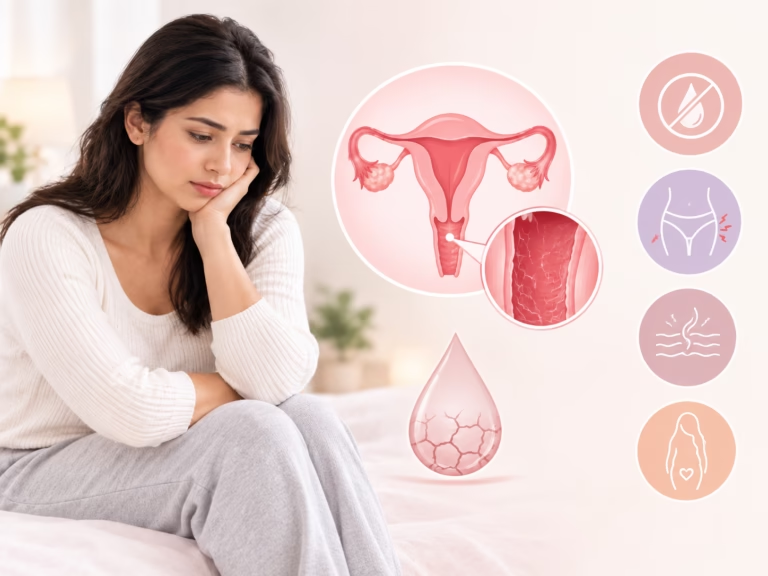

Ovulation is an important part of the menstrual cycle and plays a central role in natural conception. When ovulation does not occur regularly, menstrual cycles may become unpredictable and some women may experience difficulty getting pregnant.
However, irregular periods do not automatically mean that you are not ovulating, and difficulty conceiving does not necessarily mean that ovulation is the cause.
Women experiencing irregular cycles or fertility concerns can consult an ovulation problem doctor in Mumbai to understand whether further evaluation is appropriate.
Dr. Rutuja Narvekar at Shree Women’s Clinic provides gynaecological and reproductive health consultation in Vile Parle, Mumbai.
What Is Ovulation?
Ovulation is the process in which an ovary releases an egg during the menstrual cycle.
The timing of ovulation can vary between women and even between cycles in the same woman.
For pregnancy to occur naturally, several reproductive processes need to work together, including ovulation, sperm health, the reproductive tract and appropriate timing.
Ovulation is therefore only one component of fertility.
What Are Ovulation Problems?
Ovulation problems occur when ovulation happens irregularly or does not occur during certain menstrual cycles.
Some women may continue having menstrual bleeding despite irregular ovulation, while others notice obvious changes in their cycle.
Possible signs can include:
- Irregular periods
- Frequently missed periods
- Very long menstrual cycles
- Significant changes in cycle length
- Difficulty identifying a consistent fertile window
- Difficulty conceiving
These symptoms can have several causes, so they do not confirm an ovulation disorder by themselves.
What Are the Signs of Irregular Ovulation?
One of the most noticeable signs can be an unpredictable menstrual cycle.
Consider discussing your cycles with a gynaecologist if:
- Your periods frequently arrive very late
- You repeatedly miss periods
- Cycle length changes considerably
- You have very few periods during the year
- You have been trying to conceive without success
Some women with ovulation problems have additional hormonal symptoms, while others do not.
Do Irregular Periods Mean You Are Not Ovulating?
Not necessarily.
Irregular menstrual cycles can be associated with irregular ovulation, but there are several other possible reasons for menstrual changes.
These can include:
- PCOS
- Thyroid conditions
- Significant weight changes
- Stress
- Certain medications
- Hormonal changes
- Other medical conditions
Women experiencing persistent menstrual changes can learn more about the clinic’s Period Related Concerns service.
A proper evaluation is more useful than trying to determine ovulation solely from menstrual dates.
PCOS and Ovulation Problems
PCOS is one of the conditions commonly associated with irregular ovulation.
Women with PCOS may experience:
- Irregular periods
- Missed periods
- Acne
- Excess facial or body hair
- Hair thinning
- Weight or metabolic concerns
- Difficulty conceiving
However, not every woman with irregular ovulation has PCOS.
Likewise, PCOS symptoms can vary considerably between individuals.
Women experiencing possible PCOS symptoms can review the clinic’s PCOS, PCOD and PMOS treatment service.
Can Thyroid Problems Affect Ovulation?
Thyroid hormones influence several processes in the body, including reproductive health.
Certain thyroid conditions can affect menstrual cycles and ovulation.
If menstrual irregularities occur alongside other symptoms or medical history suggesting a thyroid problem, your doctor may recommend appropriate testing.
Do not begin thyroid medication or supplements based solely on menstrual symptoms without medical evaluation.
Can Stress Affect Ovulation?
Significant physical or emotional stress can influence menstrual cycles in some women.
However, persistent irregular periods should not automatically be attributed to stress.
If menstrual changes continue for several cycles, consider discussing them with a gynaecologist to rule out other possible causes.
Can Weight Changes Affect Ovulation?
Significant weight loss or weight gain can influence hormonal and menstrual health in some women.
Very restrictive diets or excessive exercise may also affect menstrual cycles.
The relationship between weight and reproductive health is individual and should be discussed without assuming that weight is necessarily the cause of fertility concerns.
Can You Have Periods Without Ovulating?
Yes, menstrual-like bleeding can sometimes occur without normal ovulation.
This is one reason why having bleeding every month does not necessarily confirm that ovulation is occurring normally.
If conception is taking longer than expected or cycles are significantly irregular, medical evaluation can provide more useful information.
How Do You Know If You Are Ovulating?
Several methods are commonly used to estimate the fertile window, including:
- Tracking menstrual cycles
- Monitoring cervical mucus
- Ovulation predictor kits
- Basal body temperature tracking
- Smartphone fertility applications
These methods can provide useful information but have limitations.
They should not be considered diagnostic tests for fertility or ovulation disorders.
If your cycles are highly irregular, interpreting home ovulation tracking can become particularly difficult.
Are Ovulation Predictor Kits Accurate?
Ovulation predictor kits detect changes in hormones associated with ovulation.
They can be useful for some women, but results need to be interpreted carefully, particularly when menstrual cycles are irregular or hormonal conditions such as PCOS are present.
Repeated testing without clear results is not a substitute for medical evaluation.
How Are Ovulation Problems Diagnosed?
When you consult a gynaecologist for ovulation problems in Mumbai, evaluation may begin with your menstrual and reproductive history.
Your doctor may ask about:
- Menstrual cycle length
- Frequency of periods
- Previous pregnancies
- Duration of trying to conceive
- PCOS symptoms
- Weight changes
- Existing medical conditions
- Current medications
- Previous fertility investigations
Depending on your circumstances, additional investigations may be recommended.
These can include hormonal testing, ultrasound or other assessments where clinically appropriate.
Ovulation Problems and Fertility
Irregular ovulation can make natural conception more difficult because the fertile window becomes less predictable and an egg may not be released regularly.
However, fertility involves both partners and multiple reproductive factors.
Difficulty conceiving should therefore not automatically be assumed to be caused by the woman’s ovulation.
A fertility evaluation may consider both female and male factors.
When Should You Seek Fertility Evaluation?
The appropriate timing depends on:
- Age
- Duration of trying to conceive
- Menstrual regularity
- Medical history
- Previous pregnancies
- Known reproductive conditions
Women with significantly irregular or absent periods may benefit from seeking advice earlier rather than waiting solely according to a general fertility timeline.
If you are concerned about conception, a gynaecologist can advise whether evaluation is appropriate.
Can Ovulation Problems Be Treated?
Management depends on the underlying cause.
There is no single ovulation treatment in Mumbai appropriate for every woman.
For example, management may differ when irregular ovulation is related to:
- PCOS
- Thyroid conditions
- Significant lifestyle changes
- Other hormonal conditions
- Different reproductive health concerns
Treatment should therefore focus on identifying and addressing the underlying reason rather than simply trying to “increase ovulation.”
Should You Take Ovulation Medicines Without a Doctor?
No.
Medicines that affect ovulation should be taken only under appropriate medical supervision.
The correct treatment depends on the cause of the ovulation problem and the woman’s overall reproductive health.
Using fertility or hormonal medication without appropriate evaluation can be ineffective and potentially inappropriate.
Ovulation Problems When Planning Pregnancy
Women planning pregnancy may benefit from understanding their menstrual cycle, but becoming overly focused on daily tracking can sometimes create unnecessary stress.
If your cycles are reasonably regular, you may not need extensive testing immediately.
However, if periods are persistently irregular or you have known reproductive concerns, discussing them with your gynaecologist can help determine whether further evaluation is appropriate.
Ovulation Problem Doctor in Vile Parle, Mumbai
Women experiencing irregular periods, difficulty identifying ovulation or fertility concerns can seek gynaecological evaluation rather than relying entirely on apps and home testing.
Dr. Rutuja Narvekar at Shree Women’s Clinic provides reproductive health and gynaecological consultation in Vile Parle, Mumbai.
If irregular ovulation occurs alongside possible PCOS symptoms, visit the clinic’s PCOS, PCOD and PMOS treatment page.
For broader menstrual concerns, review the Period Related Concerns service.
Frequently Asked Questions About Ovulation Problems
What are the signs that I may not be ovulating regularly?
Persistently irregular or missed periods can be associated with irregular ovulation. However, menstrual patterns alone cannot confirm an ovulation disorder.
Can I have regular periods and still have ovulation problems?
It is possible for menstrual bleeding patterns and ovulation not to align perfectly. If fertility concerns persist despite apparently regular cycles, discuss them with your gynaecologist.
Is PCOS the main cause of irregular ovulation?
PCOS is one possible cause, but thyroid conditions, significant weight changes and other hormonal or medical factors can also affect ovulation.
Can stress stop ovulation?
Significant stress can influence menstrual cycles in some women, but persistent changes should not automatically be attributed to stress without considering other causes.
Can ovulation problems cause infertility?
Irregular ovulation can make conception more difficult, but fertility depends on multiple female and male factors.
Can irregular ovulation be treated?
Treatment depends on the underlying cause. Appropriate management can only be determined after evaluating why ovulation is irregular.
Which doctor should I consult for ovulation problems?
A gynaecologist can evaluate menstrual and ovulation concerns and determine whether additional fertility investigations are appropriate.
Where can I find an ovulation problem doctor in Mumbai?
Women experiencing irregular ovulation or related fertility concerns can consult Dr. Rutuja Narvekar at Shree Women’s Clinic in Vile Parle, Mumbai.
Consult an Ovulation Problem Doctor in Mumbai
Irregular ovulation can affect menstrual cycles and may make conception more difficult, but it is only one of several factors that influence fertility.
If you have persistently irregular periods, difficulty tracking ovulation or concerns about conception and are looking for an ovulation problem doctor in Mumbai or Vile Parle, you can consult Dr. Rutuja Narvekar at Shree Women’s Clinic for personalised evaluation.
Women with symptoms suggestive of PCOS can also learn more about PCOS, PCOD and PMOS treatment, while broader menstrual concerns are covered under Period Related Concerns.