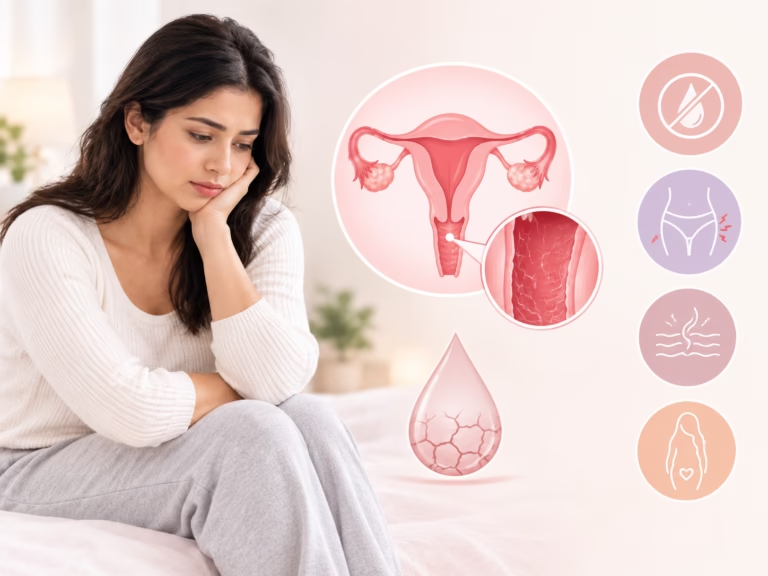

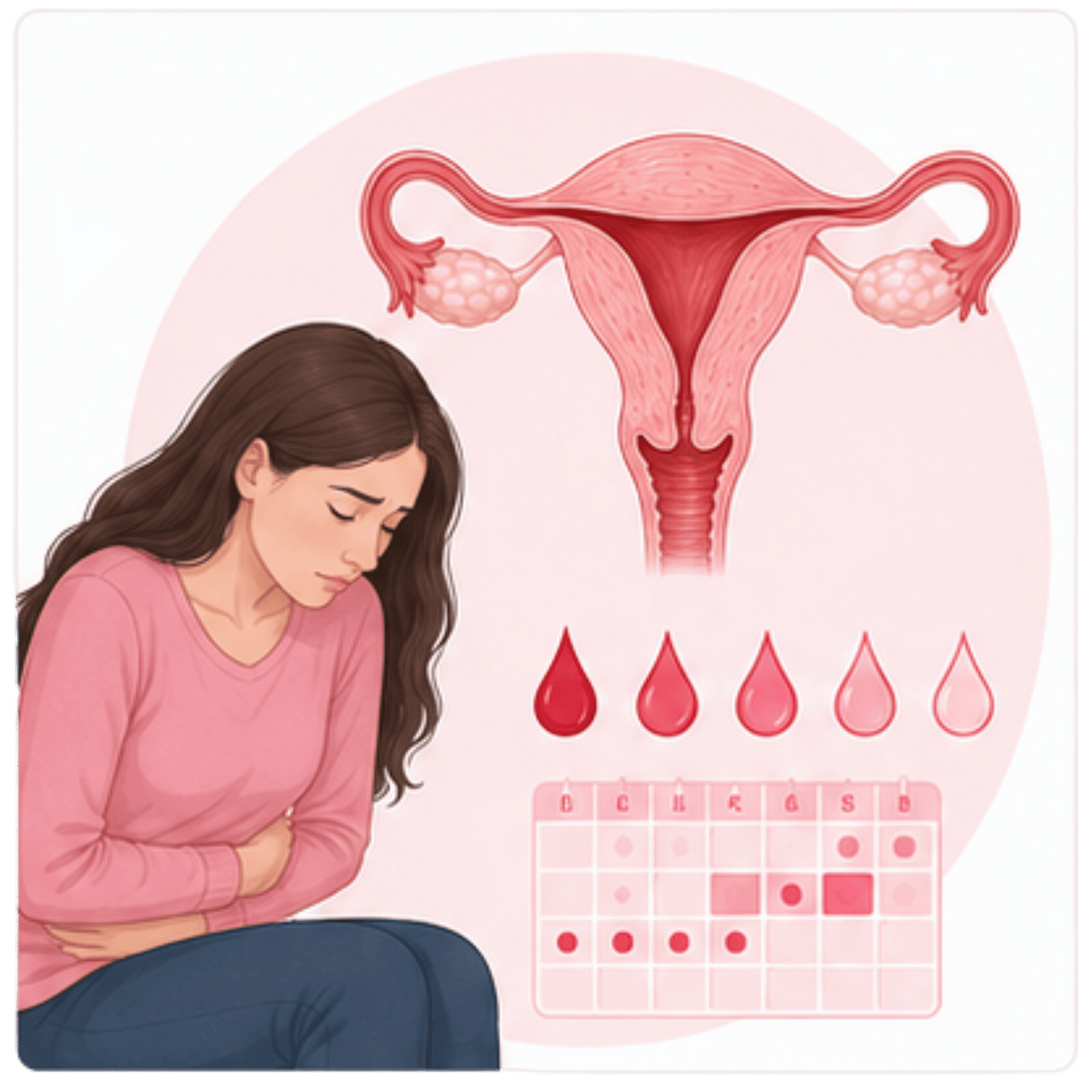
Severe period pain can make it difficult to work, study, exercise, sleep or carry out normal daily activities. While mild menstrual cramps are common, pain that is intense, repeatedly disrupts your routine or becomes worse over time should not simply be accepted as a normal part of having periods.
Painful periods can occur for different reasons. For some women, menstrual cramps occur without an underlying condition. For others, severe pain may be associated with conditions such as endometriosis, adenomyosis, fibroids or other gynaecological concerns.
If period pain regularly interferes with your everyday life, a gynaecological evaluation can help determine whether there is an underlying cause.
Women experiencing painful or changing menstrual cycles can learn more about period-related concerns and their evaluation at Shree Women’s Clinic in Vile Parle, Mumbai.
Is Period Pain Normal?
Some degree of cramping before or during menstruation is common.
Menstrual cramps can occur because the uterus contracts during a period. For many women, the discomfort is manageable and improves within a short period.
However, period pain deserves medical attention when it:
- Becomes severe
- Regularly affects work or studies
- Prevents normal physical activity
- Interferes with sleep
- Requires frequent pain medication
- Becomes progressively worse
- Occurs with unusually heavy bleeding
- Develops after previously having relatively painless periods
The important distinction is not simply whether you experience cramps, but how severe they are and how much they affect your life.
What Causes Severe Period Pain?
There is not one single cause of painful periods.
A gynaecologist may consider your age, symptoms, menstrual history and whether the pain has changed over time.
Primary Dysmenorrhea
Dysmenorrhea is the medical term for painful menstruation.
Primary dysmenorrhea refers to menstrual pain that occurs without another underlying pelvic condition.
The pain commonly begins around menstruation and may be felt in the lower abdomen or back.
Endometriosis
Endometriosis is a condition in which tissue similar to the lining of the uterus grows outside the uterus.
Symptoms can vary, but some women experience:
- Severe menstrual pain
- Pelvic pain
- Pain during intercourse
- Pain associated with bowel movements or urination around periods
- Fertility concerns
Severe period pain should not automatically be assumed to be endometriosis, but persistent symptoms may require further evaluation.
Adenomyosis
Adenomyosis occurs when tissue similar to the uterine lining is present within the muscular wall of the uterus.
Some women with adenomyosis may experience painful periods, heavy menstrual bleeding or pelvic discomfort.
Uterine Fibroids
Fibroids are non-cancerous growths that develop in or around the uterus.
Depending on their size and location, some fibroids can contribute to symptoms such as heavy periods, pelvic pressure or menstrual discomfort.
Ovarian Cysts
Ovarian cysts are fluid-filled sacs that can develop on the ovaries.
Many ovarian cysts cause no symptoms and may resolve without treatment. However, certain cysts can be associated with pelvic pain or other symptoms.
These conditions are among the reasons why persistent menstrual problems are best assessed based on the individual woman’s symptoms rather than self-diagnosed.
For more information about menstrual conditions evaluated at the clinic, visit the Period Related Concerns service page.
When Is Period Pain Considered Too Severe?
Pain is subjective, so there is no single pain score that applies to every woman.
Instead, consider how menstruation affects your normal activities.
Period pain may warrant medical evaluation when you:
- Regularly miss work, college or school because of pain
- Cannot carry out your normal activities
- Have difficulty sleeping because of cramps
- Need frequent medication to manage the pain
- Experience vomiting or significant weakness with periods
- Have pain that is becoming progressively worse
- Experience pelvic pain outside your menstrual period
If you find yourself planning your life around menstrual pain every month, consider discussing your symptoms with a gynaecologist.
Severe Period Pain With Heavy Bleeding
Painful periods accompanied by unusually heavy menstrual bleeding can be particularly disruptive.
You may notice:
- Bleeding that is much heavier than your usual flow
- Periods lasting longer than expected
- Frequent passage of large clots
- Bleeding through clothing or bedding
- Significant fatigue or weakness
Heavy and painful periods can occur for different reasons, including certain uterine conditions.
The clinic’s Period Related Concerns service covers menstrual problems including painful periods, heavy bleeding and related gynaecological conditions.
Period Pain and PCOS: Are They Connected?
PCOS is commonly associated with irregular menstrual cycles and problems with ovulation.
Some women with PCOS may experience menstrual discomfort, but severe period pain should not automatically be attributed to PCOS.
If your main symptoms include irregular or missed periods along with acne, unwanted facial hair, weight changes or difficulty conceiving, PCOS may require separate evaluation.
You can learn more about PCOS, PCOD and PMOS treatment at Shree Women’s Clinic.
This internal distinction is important because painful periods and PCOS can involve different underlying mechanisms and treatment approaches.
How Is Severe Period Pain Evaluated?
When you consult a gynaecologist for persistent menstrual pain, evaluation usually begins with understanding your symptoms.
Your doctor may ask about:
- When the pain begins
- How long the pain lasts
- Where the pain occurs
- Severity of the pain
- Whether symptoms are worsening
- Menstrual flow
- Cycle regularity
- Pain between periods
- Pain during intercourse
- Previous pregnancies
- Current medications
- Other medical conditions
Depending on your symptoms, additional examination, ultrasound or other investigations may be recommended.
Not every woman experiencing period pain requires the same tests.
How Is Severe Period Pain Treated?
Treatment depends on the cause and severity of the symptoms.
There is no single treatment appropriate for every woman experiencing painful periods.
Management may involve medications or treatment directed at an underlying condition when one is identified.
For example, the treatment approach for primary menstrual cramps may differ from treatment required when pain is associated with endometriosis, adenomyosis or fibroids.
This is why identifying the possible cause is important before deciding on long-term management.
Should You Keep a Period Pain Diary?
Keeping track of symptoms can be useful before visiting your gynaecologist.
For a few menstrual cycles, consider recording:
- First day of your period
- Duration of bleeding
- Severity of pain
- Location of pain
- Amount of menstrual flow
- Presence of blood clots
- Medication taken for pain
- Whether pain caused you to miss normal activities
- Symptoms occurring outside your period
This information can help provide a clearer picture of how your symptoms change throughout your cycle.
Can Lifestyle Measures Help With Period Pain?
Some women find that simple measures can help with mild menstrual discomfort.
These may include:
Heat
Applying gentle heat to the lower abdomen may provide temporary relief from menstrual cramps for some women.
Regular Physical Activity
Maintaining regular physical activity can support overall health and may help some women manage menstrual symptoms.
Adequate Sleep
Sleep and rest are important for overall wellbeing, particularly when menstrual symptoms cause fatigue.
Balanced Nutrition
Maintaining a balanced diet and adequate hydration supports general health.
Lifestyle measures, however, should not be used as a substitute for medical evaluation when period pain is severe or worsening.
Period Pain Treatment in Mumbai: When Should You Consult a Gynaecologist?
Consider consulting a gynaecologist if:
- Period pain is severe
- Pain repeatedly disrupts daily activities
- Your symptoms are becoming worse
- Your periods have become significantly heavier
- You experience pelvic pain between periods
- You experience pain during intercourse
- You have difficulty conceiving
- Your menstrual pattern has changed significantly
Women looking for period pain treatment in Mumbai should focus on identifying the cause rather than simply suppressing recurring symptoms every month.
Period Pain Treatment in Vile Parle
For women living or working around Vile Parle, persistent menstrual pain can be evaluated as part of a broader assessment of menstrual health.
Dr. Rutuja Narvekar at Shree Women’s Clinic provides gynaecological consultation in Vile Parle, Mumbai.
Women experiencing painful, heavy or irregular menstrual cycles can also review the clinic’s dedicated Period Related Concerns service for more information.
Frequently Asked Questions About Period Pain
Is severe period pain normal?
Mild menstrual cramps are common. However, severe pain that regularly prevents you from carrying out normal activities should be discussed with a gynaecologist.
Why are my periods becoming more painful?
There are several possible reasons. Changes in menstrual pain may sometimes be associated with conditions such as endometriosis, adenomyosis, fibroids or other gynaecological concerns. Persistent changes should be evaluated.
Can endometriosis cause painful periods?
Yes. Severe menstrual pain can be one symptom associated with endometriosis, although period pain alone does not confirm the condition.
Can fibroids cause painful periods?
Some fibroids can be associated with menstrual discomfort, heavy bleeding or pelvic pressure. Symptoms depend partly on the size and location of the fibroids.
Can PCOS cause severe period pain?
PCOS primarily affects hormones, ovulation and menstrual regularity. Severe menstrual pain should not automatically be assumed to be caused by PCOS.
Which doctor should I consult for painful periods?
A gynaecologist can assess persistent or severe menstrual pain and determine whether further investigations are appropriate.
Where can I consult a gynaecologist for period pain in Mumbai?
Women experiencing severe or recurring menstrual pain can consult a qualified gynaecologist. Dr. Rutuja Narvekar provides gynaecological consultation at Shree Women’s Clinic in Vile Parle, Mumbai.
Consult a Gynaecologist for Severe Period Pain in Mumbai
Having periods does not mean that severe monthly pain must simply be tolerated. When menstrual pain repeatedly affects your work, studies, sleep or normal activities, understanding the underlying cause is important.
If you are experiencing severe period pain and looking for a gynaecologist in Mumbai or Vile Parle, you can consult Dr. Rutuja Narvekar at Shree Women’s Clinic for personalised evaluation.
For painful periods, heavy bleeding and other menstrual concerns, visit the clinic’s Period Related Concerns service page.