

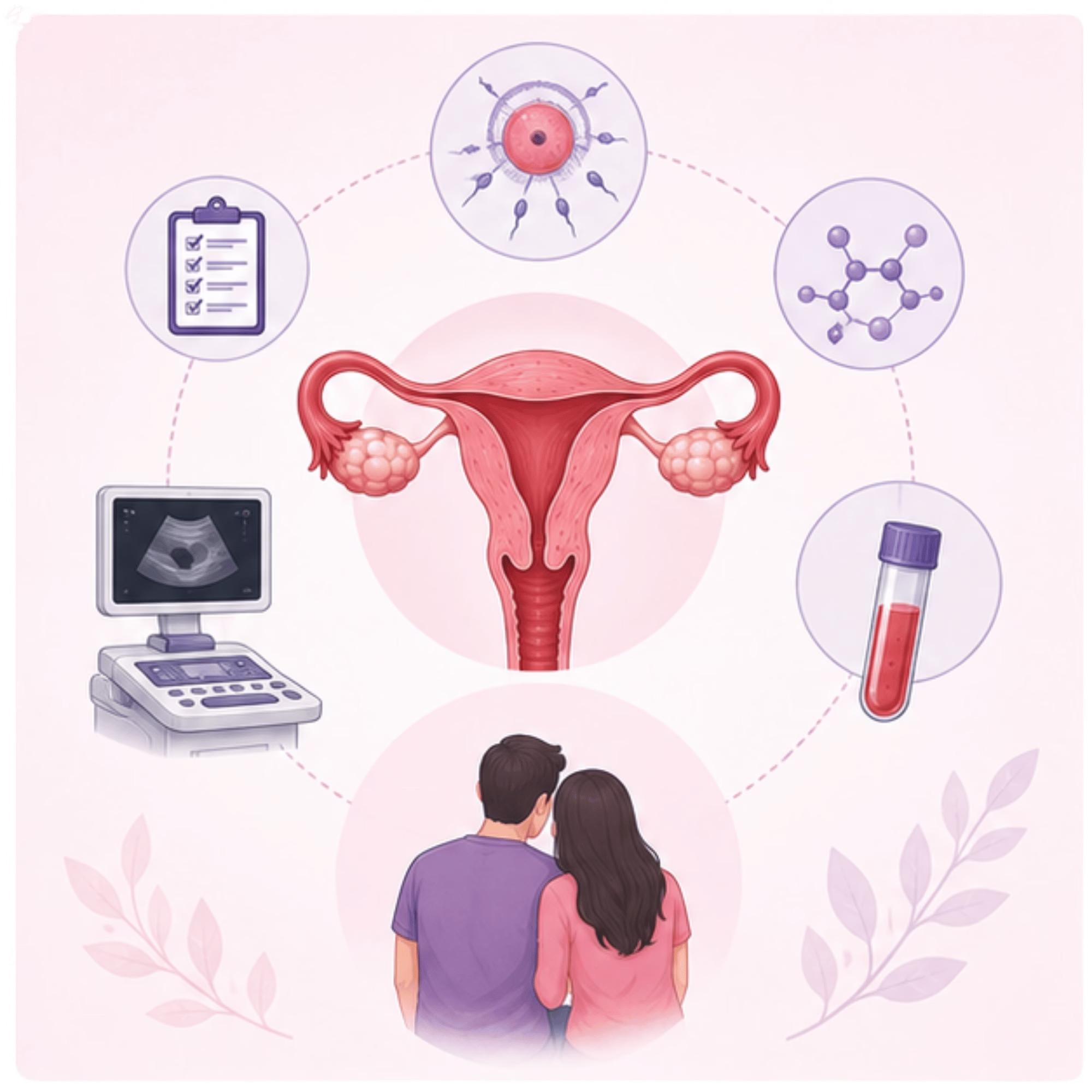
If you have been trying to conceive without success, you may wonder when it is time to consult a gynaecologist for fertility in Mumbai. While pregnancy does not always happen immediately, certain menstrual, hormonal and reproductive health concerns may make an earlier medical evaluation appropriate.
Fertility is influenced by several factors involving both partners. A fertility evaluation is therefore not simply about finding a problem; it is about understanding reproductive health, identifying possible factors affecting conception and deciding whether further investigation is necessary.
Women in Mumbai experiencing difficulty conceiving can consult Dr. Rutuja Narvekar at Shree Women’s Clinic in Vile Parle for gynaecological and reproductive health guidance.
How Long Does It Normally Take to Get Pregnant?
Pregnancy does not necessarily occur during the first month of trying.
The time required to conceive can vary depending on several factors, including:
- Age
- Ovulation
- Menstrual cycle regularity
- Frequency and timing of intercourse
- Reproductive health
- Medical history
- Male fertility factors
This is why comparing your experience with friends or family members is not particularly useful.
A gynaecologist can help determine whether continued trying is appropriate or whether fertility evaluation should be considered.
When Should You Consult a Gynaecologist for Fertility?
The appropriate time to seek medical advice depends partly on age and individual medical history.
In general, fertility evaluation may be considered after a period of regular unprotected intercourse without conception. Women over a certain age or those with known reproductive or medical concerns may be advised to seek evaluation sooner.
You should consider speaking with a gynaecologist earlier if you have:
- Very irregular periods
- Frequently missed periods
- A known history of PCOS
- Severe period pain
- Previous pelvic infections
- Known endometriosis
- Previous reproductive surgery
- Recurrent pregnancy loss
- Other known reproductive health conditions
Individual circumstances matter, so there is no single timeline appropriate for every couple.
Can Irregular Periods Make It Harder to Get Pregnant?
Irregular periods can sometimes indicate that ovulation is not occurring regularly.
When menstrual cycles are unpredictable, identifying the fertile window can also become more difficult.
Irregular periods can have several possible causes, including hormonal conditions, thyroid problems, significant weight changes and PCOS.
If irregular cycles occur together with acne, excess facial hair, weight changes or other hormonal symptoms, PCOS may require evaluation.
Women experiencing these symptoms can learn more about PCOS, PCOD and PMOS treatment at Shree Women’s Clinic.
However, irregular periods do not automatically mean that a woman is infertile.
PCOS and Difficulty Getting Pregnant
PCOS is a common hormonal condition that can affect ovulation.
Some women with PCOS ovulate irregularly, which may make conception more difficult. Others with PCOS may conceive without fertility treatment.
If you have PCOS and are planning pregnancy, your gynaecologist may evaluate factors such as:
- Menstrual cycle regularity
- Ovulation
- Hormonal health
- Medical history
- Metabolic health
- Duration of trying to conceive
Management should be individualised according to your reproductive goals and health.
For more information, visit the clinic’s PCOS, PCOD and PMOS service page.
Can Severe Period Pain Be Related to Fertility?
Severe menstrual pain does not automatically indicate a fertility problem.
However, conditions associated with significant period pain, such as endometriosis, can sometimes also affect fertility.
Consider medical evaluation if your menstrual pain:
- Regularly prevents normal activities
- Has progressively worsened
- Occurs with pelvic pain outside your period
- Is associated with pain during intercourse
- Occurs alongside difficulty conceiving
Painful periods should be evaluated based on the complete pattern of symptoms.
The clinic’s Period Related Concerns service provides further information about painful periods and related gynaecological conditions.
Does Age Affect Female Fertility?
Yes. Female fertility changes with age.
The number and quality of available eggs naturally decline over time, although the rate and reproductive experience differ between women.
Age is therefore one factor a gynaecologist considers when advising how long to try naturally before considering fertility evaluation.
This does not mean that age alone determines whether someone can become pregnant. Reproductive health needs to be considered individually.
What Is a Fertility Evaluation?
A fertility evaluation aims to identify factors that may be affecting conception.
For women, the initial assessment may include a detailed discussion about:
- Menstrual history
- Cycle regularity
- Previous pregnancies
- Previous miscarriages
- Medical conditions
- Previous surgeries
- Medications
- Previous infections
- Duration of trying to conceive
- Lifestyle factors
Your gynaecologist may then recommend investigations according to your individual circumstances.
What Tests May Be Recommended for Female Fertility?
There is no single fertility test appropriate for every woman.
Depending on your history and symptoms, evaluation may include:
- Blood tests
- Hormonal investigations
- Assessment of ovulation
- Ultrasound
- Evaluation of reproductive organs
- Other investigations when clinically indicated
The investigations required depend on the individual rather than following the same checklist for everyone.
Is Fertility Only a Women’s Issue?
No.
Difficulty conceiving can involve female factors, male factors, a combination of both or sometimes no immediately identifiable cause.
This is why fertility assessment should not automatically focus only on the woman.
Depending on the couple’s circumstances, evaluation of the male partner may also be appropriate.
Can Lifestyle Affect Fertility?
Overall health and lifestyle can influence reproductive health, although fertility problems should not automatically be blamed on lifestyle.
Factors worth discussing with your doctor may include:
- Smoking
- Alcohol
- Nutrition
- Physical activity
- Significant weight changes
- Sleep
- Existing medical conditions
- Certain medications
Extreme lifestyle changes or unproven fertility diets should not replace proper medical evaluation.
Should You Track Ovulation When Trying to Conceive?
Understanding your menstrual cycle can be useful when planning pregnancy.
Women with relatively regular cycles may notice patterns associated with ovulation. However, cycle-tracking applications and home methods cannot diagnose whether ovulation is occurring normally.
If cycles are very irregular or pregnancy is not occurring despite regular attempts, medical evaluation may provide more useful information than continuously relying on tracking apps.
What Should You Take to Your First Fertility Consultation?
Providing accurate information can make the first consultation more useful.
Consider bringing or noting:
- Dates of recent menstrual periods
- Typical cycle length
- How long you have been trying to conceive
- Previous pregnancy history
- Previous fertility investigations
- Existing medical conditions
- Current medications and supplements
- Previous surgeries
- Relevant medical reports
If you have already undergone blood tests or ultrasound examinations, take those reports with you.
Fertility Evaluation in Mumbai: Why Early Guidance Can Help
Seeking a fertility consultation does not automatically mean you will require fertility treatment.
For some couples, evaluation may identify a relatively straightforward issue. For others, further investigations may be required.
The purpose of seeing a gynaecologist for fertility in Mumbai is first to understand the reproductive situation and determine appropriate next steps.
Avoid beginning hormonal medication, supplements or unproven fertility treatments without appropriate medical guidance.
Fertility Doctor in Vile Parle
For women living or working in and around Vile Parle, accessing a gynaecologist locally can make consultations and any required follow-ups more convenient.
Dr. Rutuja Narvekar at Shree Women’s Clinic provides gynaecological and reproductive health consultation in Vile Parle, Mumbai.
Women whose fertility concerns are accompanied by irregular periods or PCOS symptoms can also review the clinic’s PCOS, PCOD and PMOS treatment service.
Frequently Asked Questions About Fertility
When should I see a doctor if I am not getting pregnant?
The appropriate timing depends on your age, how long you have been trying and your medical and reproductive history. Women with known menstrual or reproductive concerns may benefit from seeking advice earlier.
Do irregular periods affect fertility?
Irregular periods can sometimes be associated with irregular ovulation, which may make conception more difficult. However, irregular periods do not automatically mean infertility.
Can PCOS make it difficult to conceive?
PCOS can affect ovulation in some women and may therefore make conception more difficult. Many women with PCOS can still become pregnant.
Can painful periods affect fertility?
Pain itself does not necessarily affect fertility. However, some conditions associated with severe period pain, such as endometriosis, can sometimes be associated with fertility concerns.
Does fertility depend only on the woman?
No. Male and female factors can both influence conception, and fertility evaluation may involve both partners.
Which doctor should I consult for fertility concerns?
A gynaecologist can provide an initial reproductive health and fertility evaluation and advise whether additional investigations or specialist care are required.
Where can I consult a gynaecologist for fertility in Mumbai?
Women looking for a gynaecologist for fertility in Mumbai can consult Dr. Rutuja Narvekar at Shree Women’s Clinic in Vile Parle for evaluation and personalised guidance.
Consult a Gynaecologist for Fertility in Mumbai
Difficulty conceiving can have many possible causes, and the appropriate evaluation depends on age, menstrual health, medical history and factors involving both partners.
If you are trying to conceive and are looking for a gynaecologist for fertility in Mumbai or fertility evaluation in Vile Parle, you can consult Dr. Rutuja Narvekar at Shree Women’s Clinic for personalised reproductive health guidance.
Women experiencing irregular cycles or other possible PCOS symptoms can also learn more about the clinic’s PCOS, PCOD and PMOS treatment services.