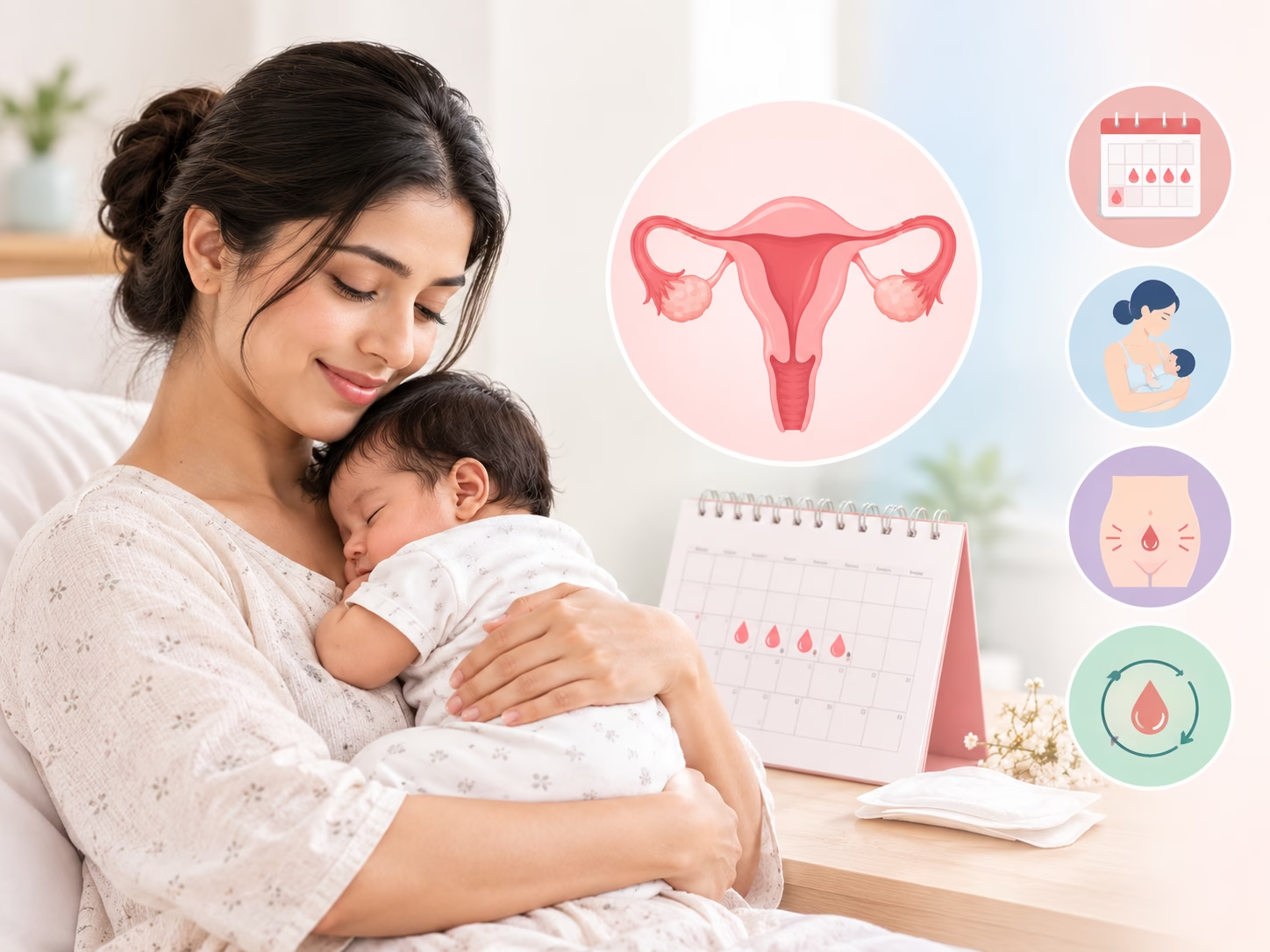
Periods after delivery do not return at exactly the same time for every woman. Some women begin menstruating relatively soon after childbirth, while others may not have a period for several months, particularly when breastfeeding.
When periods do return, the first few cycles may also feel different from those before pregnancy. Changes in flow, timing and menstrual discomfort can occur while the body adjusts after childbirth.
Understanding what can happen after delivery—and which symptoms deserve medical attention—can help women navigate postpartum recovery with greater confidence.
Women with concerns about menstrual health after pregnancy can consult Dr. Rutuja Narvekar at Shree Women’s Clinic in Vile Parle, Mumbai.
When Do Periods Return After Delivery?
There is no single timeline that applies to every woman.
The return of menstruation after childbirth can be influenced by several factors, particularly breastfeeding and individual hormonal changes.
Women who are not breastfeeding may notice their menstrual cycle returning earlier than women who are exclusively or frequently breastfeeding.
Even among women with similar breastfeeding patterns, the timing can vary considerably.
This means comparing your postpartum cycle with another mother’s experience is not particularly useful.
How Does Breastfeeding Affect Periods?
Breastfeeding influences hormones involved in ovulation and menstruation.
Women who breastfeed frequently may experience a longer delay before periods return.
However, breastfeeding patterns differ, and menstruation can return even while a woman is still breastfeeding.
Periods may also begin returning as:
- Breastfeeding frequency decreases
- Night feeds become less frequent
- Complementary feeding begins
- The baby starts sleeping for longer periods
There is still considerable individual variation.
Can You Ovulate Before Your First Period After Delivery?
Yes.
Ovulation can occur before the first postpartum menstrual period.
This is important because it means pregnancy can potentially occur before you have seen your first period after childbirth.
Women who want to avoid another pregnancy should discuss appropriate postpartum contraception with their healthcare provider rather than relying solely on the absence of periods.
What Is the First Period After Delivery Like?
The first menstrual period after pregnancy may not be exactly like your periods before pregnancy.
Some women notice:
- Heavier bleeding
- Lighter bleeding
- Stronger cramps
- Milder cramps
- Small blood clots
- A longer or shorter period
- Changes in cycle length
The first few cycles can sometimes be less predictable while hormonal patterns are re-establishing.
However, very heavy bleeding or symptoms causing significant concern should be medically evaluated.
Are Irregular Periods After Delivery Normal?
Periods can initially be irregular after they return.
Breastfeeding, hormonal changes and postpartum recovery can influence menstrual timing.
Your cycles may gradually become more predictable over time.
However, consider consulting a gynaecologist if periods remain persistently irregular or occur with other symptoms such as:
- Very heavy bleeding
- Severe menstrual pain
- Bleeding between periods
- Significant weakness or dizziness
- Other hormonal symptoms
Women experiencing ongoing menstrual problems can also review the clinic’s Period Related Concerns service.
Postpartum Bleeding vs First Period: What Is the Difference?
Bleeding immediately after childbirth is not your menstrual period.
Postpartum vaginal bleeding and discharge following delivery is commonly known as lochia. It occurs as the uterus recovers after childbirth.
It typically changes in amount and appearance over time.
Your first actual menstrual period occurs later, after the menstrual and ovulatory cycle begins returning.
If postpartum bleeding suddenly becomes very heavy, develops a concerning smell, occurs with fever or is accompanied by significant pain, contact your healthcare provider.
Can Your Periods Become Heavier After Pregnancy?
Some women notice that menstrual flow changes after childbirth.
A period may temporarily be heavier than it was before pregnancy, particularly during the initial cycles.
However, repeatedly very heavy periods deserve medical evaluation.
Speak with a gynaecologist if you experience:
- Very heavy menstrual flow
- Frequent soaking through menstrual products
- Large clots repeatedly
- Bleeding lasting much longer than expected
- Dizziness or unusual weakness
- Symptoms interfering with normal activities
Heavy bleeding can have several possible causes and should not automatically be attributed to childbirth.
Can Period Pain Change After Delivery?
Yes. Some women notice changes in menstrual cramps after pregnancy.
Periods may become more or less uncomfortable than they were before childbirth.
Persistent severe period pain, however, should not simply be considered a normal postpartum change.
Conditions such as fibroids, adenomyosis, endometriosis and other pelvic concerns can also contribute to painful periods.
For persistent painful or heavy menstruation, visit the clinic’s Period Related Concerns service page.
What If Your Period Has Not Returned After Delivery?
The absence of menstruation for several months can occur, particularly during breastfeeding.
However, whether the delay requires evaluation depends on factors including:
- Breastfeeding
- Time since delivery
- Contraception
- Possibility of another pregnancy
- Previous menstrual history
- Other symptoms
If you are concerned about how long your periods have been absent, discuss it with your gynaecologist rather than assuming there is a hormonal problem.
Can PCOS Affect Periods After Pregnancy?
Women who had PCOS before pregnancy may continue to experience irregular menstrual cycles after childbirth.
However, postpartum menstrual irregularity should not automatically be attributed to PCOS because breastfeeding and normal postpartum hormonal changes can also affect periods.
If your cycles remain irregular and you also experience symptoms such as acne, excess facial or body hair or other hormonal concerns, further evaluation may be appropriate.
Women with PCOS-related concerns can review the clinic’s PCOS, PCOD and PMOS treatment service.
Can You Get Pregnant Before Your Periods Become Regular?
Yes.
Ovulation can occur even when postpartum menstrual cycles are irregular.
Therefore, irregular or absent periods should not automatically be considered reliable contraception.
If you are not planning another pregnancy immediately, discuss postpartum contraceptive options with your gynaecologist.
The appropriate choice depends on factors including breastfeeding, medical history and personal preferences.
When Should You See a Gynaecologist About Postpartum Periods?
Consider medical evaluation if you experience:
- Very heavy menstrual bleeding
- Periods lasting unusually long
- Severe menstrual pain
- Persistent bleeding between periods
- Significant dizziness or weakness
- Menstrual changes that continue to concern you
- Persistently irregular cycles after postpartum hormonal changes would reasonably be expected to settle
- Other unusual gynaecological symptoms
If bleeding is extremely heavy, accompanied by fainting or severe pain, or you feel acutely unwell, seek prompt medical care.
Menstrual Health After Delivery in Mumbai
Postpartum care does not end immediately after childbirth.
Recovery can involve changes in:
- Menstrual cycles
- Breastfeeding
- Sleep
- Vaginal health
- Sexual health
- Contraception
- Emotional wellbeing
- General physical recovery
Women should feel comfortable discussing these concerns during postpartum gynaecological consultations.
Dr. Rutuja Narvekar at Shree Women’s Clinic provides gynaecological and obstetric consultation in Vile Parle, Mumbai.
Frequently Asked Questions About Periods After Delivery
When will my first period come after delivery?
The timing varies considerably and is strongly influenced by breastfeeding and individual hormonal recovery.
Can periods return while breastfeeding?
Yes. Breastfeeding can delay menstruation, but periods can return while you are still breastfeeding.
Is the first period after delivery usually heavy?
Some women notice heavier bleeding during their first postpartum periods, while others do not. Very heavy or concerning bleeding should be evaluated.
Are irregular periods normal after pregnancy?
The first cycles after periods return can sometimes be irregular, particularly while breastfeeding. Persistent menstrual irregularities should be discussed with a gynaecologist if they concern you.
Can I get pregnant before my first postpartum period?
Yes. Ovulation can occur before the first menstrual period, which means pregnancy is possible.
Is bleeding immediately after childbirth a period?
No. Postpartum bleeding following delivery is different from menstruation and occurs as part of recovery after childbirth.
Can PCOS make postpartum periods irregular?
Women with PCOS may continue experiencing menstrual irregularities after pregnancy, but breastfeeding and normal postpartum hormonal changes can also influence cycles.
Which doctor should I consult for irregular periods after delivery?
A gynaecologist can assess persistent postpartum menstrual changes and determine whether further evaluation is appropriate.
Consult a Gynaecologist for Period Concerns After Delivery
The return of menstruation after childbirth differs from woman to woman. Breastfeeding and hormonal changes can influence when periods return and how regular the first few cycles are.
However, very heavy bleeding, severe pain or persistent menstrual concerns deserve appropriate evaluation.
If you have concerns about periods after delivery, you can consult Dr. Rutuja Narvekar at Shree Women’s Clinic in Vile Parle, Mumbai.
For persistent heavy, painful or irregular periods, visit the clinic’s Period Related Concerns service page. Women with known PCOS can also review the PCOS, PCOD and PMOS service.